
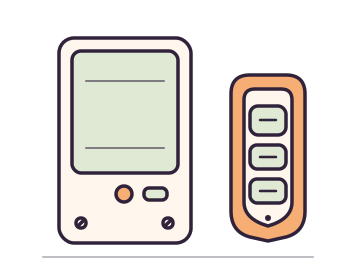
Compare the controls safely
When the door is intact and it is safe to observe, note whether the remote and wall control give the same response. One may work while the other does nothing. Both may behave alike.
That comparison helps describe a garage door opener repair request in Inglewood. It doesn't mean the remote is always at fault when a door won't open, or that a motor noise proves the moving door is sound.
If the door is crooked, damaged or hanging partway up, stop using the controls and keep clear. The garage door itself may need attention before the opener can be assessed properly.
A new remote still needs to match
A similar case and button layout don't prove that a replacement remote works with an existing opener. Model details and the supported control system matter.
If you have the old remote, keep it available. Note whether the problem followed a battery change, power interruption or new device. Those details are useful even if you aren't sure they are connected.
A missing remote can also be an access concern. Ask what can be changed for the supported system rather than assuming that obtaining another remote makes the lost one stop working.
Know which entrance you are changing
The main garage door, a side-door lock and a shared building gate may all be separate. Work on one doesn't automatically change the other two.
For a shared Inglewood garage, the building manager may control the opener or entry system. A resident should check that arrangement before requesting changes. A privately controlled home garage has a different starting point.
Agree on the part of the system being checked, the work proposed and any supplied remote or other component. Then test the functions included in that job from a safe position. Specific model support and current availability can be discussed at 424-732-7324.